
Buying land can be an exciting step, especially if you are planning to build an independent home or secure a property for the future. But before finalising a purchase, there is one important detail you should never overlook: the legal classification of the land.
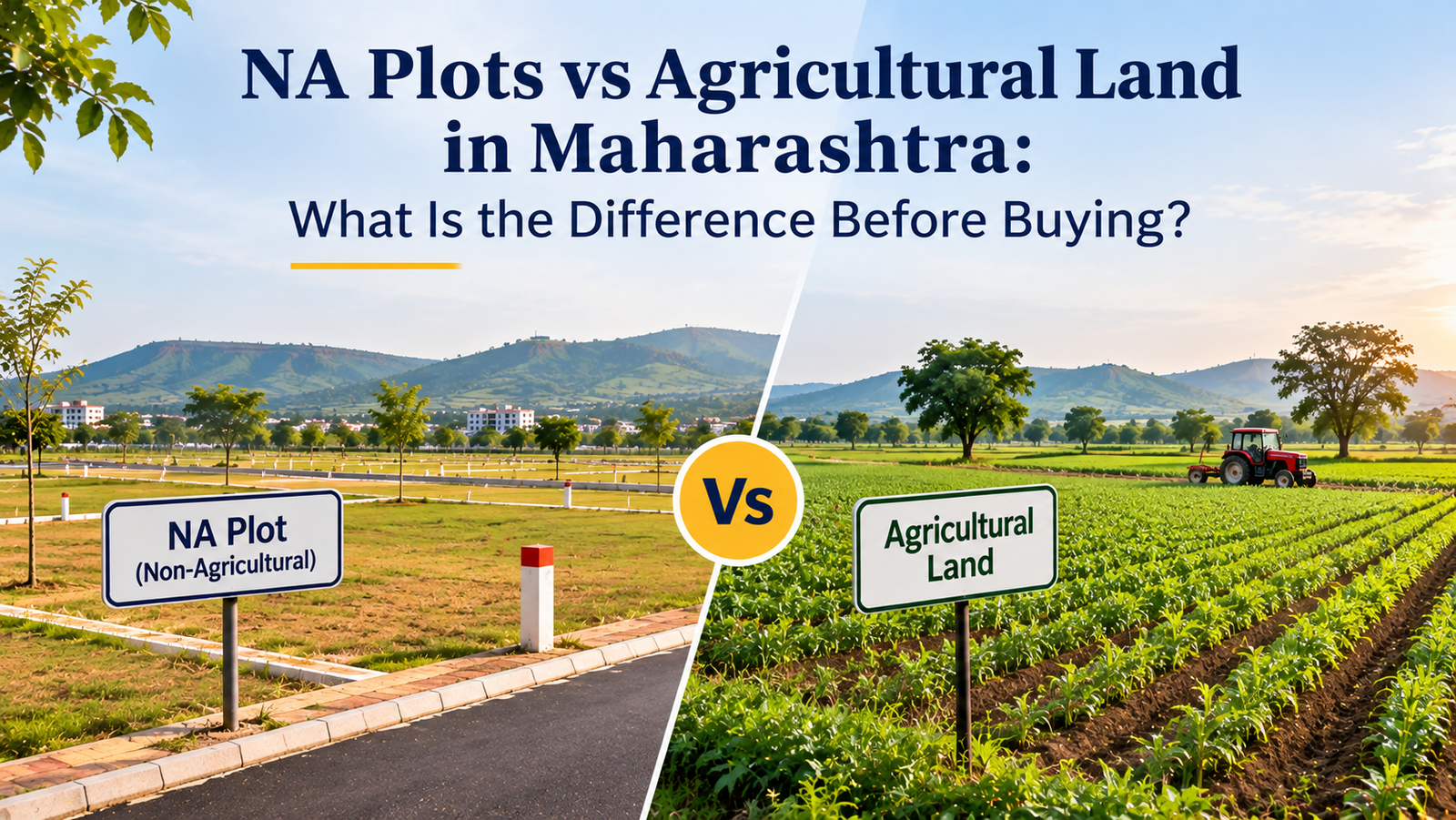
In Maharashtra, agricultural land and Non-Agricultural (NA) land are treated differently. While agricultural land is primarily meant for farming, NA land has been permitted for a specified non-agricultural purpose, such as residential or commercial use.
The difference matters because owning a piece of land does not automatically give you the right to construct a house on it. If you are exploring residential plots in Pune or nearby locations, understanding the distinction can help you avoid legal complications and make a more informed decision.
1. What Is NA Land and What Is Agricultural Land?
Before comparing the two, it is useful to understand what each category means.
NA land refers to land that has been permitted for a non-agricultural use under the applicable laws and planning regulations. Depending on the approval, it may be used for residential, commercial or industrial purposes.
For example, a plot approved for residential use may be considered for constructing a house, provided the buyer also obtains the necessary building permissions and follows the applicable development rules.
Agricultural land, on the other hand, is primarily intended for farming, cultivation and other permitted agricultural activities. Its use is governed by relevant land revenue and planning regulations.
If you are planning to build a home, purchasing agricultural land without checking its conversion status and applicable permissions can create problems later.
In simple terms, the most important thing is to ensure that the land’s approved use matches what you intend to do with it.
2. Key Differences Between NA Plots and Agricultural Land
Although both involve land ownership, NA plots and agricultural land serve different purposes. Here are the key differences buyers should understand.
Purpose of use: NA land is approved for a specified non-agricultural purpose, such as residential or commercial use. Agricultural land is primarily meant for farming and related activities.
Construction permissions: A residential NA plot may be used for home construction, subject to sanctioned plans and applicable building regulations. Agricultural land generally requires the relevant permissions or conversion before residential development.
Legal requirements: Buyers need to verify ownership, land classification, applicable approvals and development permissions for either type of property.
Suitability for residential buyers: An approved residential NA plot may be more suitable for someone planning to construct an independent home. Agricultural land may be relevant for farming or other legally permitted agricultural purposes.
Investment considerations: The value and suitability of either property depend on its location, legal status, accessibility and market demand. Neither category guarantees future appreciation.
The key takeaway is simple: do not choose land based only on its price or location. First, understand what the property is legally permitted to be used for.
3. Why Should Homebuyers Consider NA Plots in Pune?
As Pune continues to expand, some homebuyers are looking beyond conventional apartments and exploring residential plots in the city and its surrounding locations.
For people who prefer independent homes, NA residential plots can offer greater flexibility. Buyers can plan their construction according to their family’s needs, available budget and preferred design, subject to the applicable permissions.
Locations such as Khed Shivapur and other developing areas around Pune are also attracting attention from people researching plotted residential developments.
However, it is important to remember that not every plot advertised for sale is automatically approved for residential construction. Buyers should check the actual land-use classification, NA permission and sanctioned layout of the specific property.
A site visit and a review of the project’s legal documents can help you understand whether the plot is genuinely suitable for your residential plans.
4. Important Documents to Check Before Buying an NA Plot
Finding a suitable location is only one part of buying land. The paperwork deserves just as much attention, particularly when purchasing a residential plot in Maharashtra.
Before proceeding, ask for the relevant documents and have them independently verified.
- Title deed: Check the ownership history and confirm that the seller has the legal right to sell the property.
- 7/12 extract: Review the relevant land records for ownership details, land classification and other recorded information.
- NA permission or applicable conversion records: Confirm that the land has the required approval for its intended non-agricultural use, wherever applicable.
- Sanctioned layout: Verify that the plotted development has received the necessary layout approval from the competent authority.
- Property card and survey details: Cross-check the property’s identification and ownership records, wherever applicable.
- Encumbrance details: Check whether the land has any existing mortgage, legal claim or other recorded liability.
- MahaRERA registration: Verify whether the plotted development falls under the registration requirements of Maharashtra RERA.
It is also advisable to consult a qualified property lawyer before signing an agreement or making a substantial payment. A professional review can help identify missing documents, unclear ownership records or restrictions on land use.
5. Can Agricultural Land Be Converted into NA Land in Maharashtra?
Yes, agricultural land may be permitted for non-agricultural use, but the process depends on the applicable laws, planning regulations and the property’s location.
Not every agricultural parcel can automatically be converted into residential land. The property’s development plan, zoning classification, location and other restrictions can influence whether residential use is permitted.
If you are considering buying agricultural land with the intention of converting it later, make sure you understand the following:
- Permitted land use: Check whether residential development is allowed under the applicable development plan or regional plan.
- Conversion requirements: Understand whether NA permission or another applicable approval is required.
- Restricted areas: Confirm whether the land falls within a protected, restricted or otherwise regulated zone.
- Planning authority approval: Identify the competent authority responsible for approving the proposed development.
- Additional charges: Check whether development charges, premiums or other statutory payments may apply.
Maharashtra’s land revenue and planning laws also contain provisions and exemptions that may affect the permission process in certain areas.
For this reason, never rely only on a seller’s assurance that agricultural land can easily be converted into NA land. Verify the property’s status with the relevant authority and seek legal advice before making a purchase.
6. How to Choose the Right Land for Your Residential Requirements
Choosing between NA plots and agricultural land ultimately depends on why you are buying the property.
If your goal is to construct an independent home, a plot approved for residential use may offer a more practical starting point. It is still important to verify the sanctioned layout, applicable permissions, building regulations and infrastructure before proceeding.
For buyers exploring plotted residential developments around Pune, Teak County by Ranjeet Developers in Khed Shivapur is one project worth researching. Before considering a purchase, review its residential land-use approvals, sanctioned layout, applicable RERA requirements, plot details and available infrastructure.
Take time to compare different properties, visit shortlisted locations and understand the legal documentation. A lower purchase price may not necessarily mean a better deal if the land comes with restrictions or unclear approvals.
Ultimately, the right land is one that is legally suitable for your intended use, fits your budget and supports your long-term residential plans.
Frequently Asked Questions
1. What is the difference between NA land and agricultural land?
NA land has been permitted for a specified non-agricultural purpose, such as residential or commercial use. Agricultural land is primarily intended for farming and related activities.
2. Can I build a house on agricultural land in Maharashtra?
You cannot assume that agricultural land can be used for residential construction. The required land-use permissions, conversion requirements and development approvals must be checked before building.
3. Are NA plots suitable for residential investment?
Plots approved for residential use can be considered by buyers planning independent homes. However, legal approvals, location, infrastructure and purchase price should be carefully evaluated.
4. What documents should I check before buying an NA plot?
Important documents include the title deed, relevant 7/12 extract, applicable NA permission, sanctioned layout, ownership records and encumbrance details.
5. Is RERA registration mandatory for every NA plot?
No. RERA registration depends on the nature and size of the plotted development and whether the project falls within the registration requirements of the Real Estate (Regulation and Development) Act.