
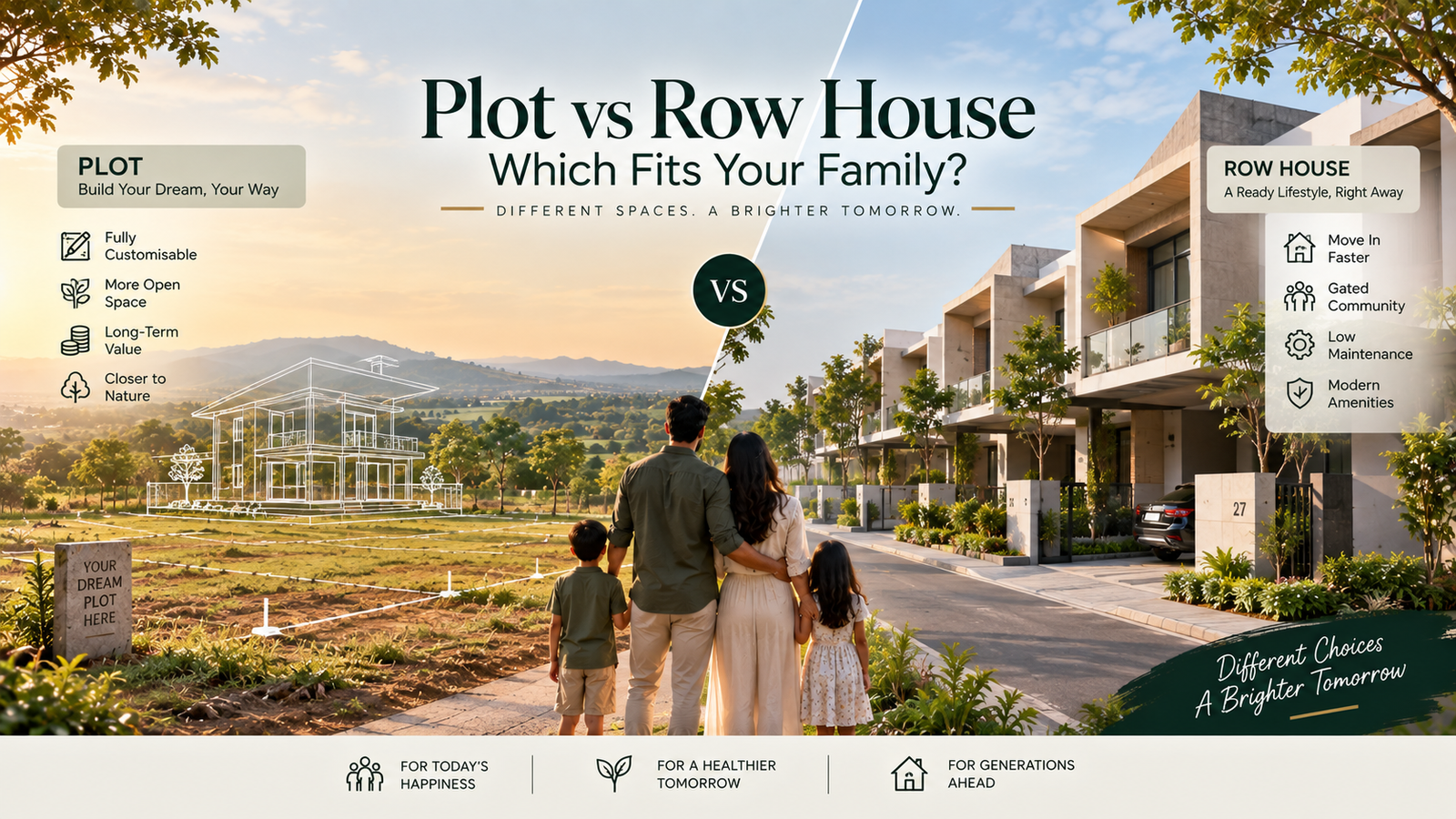
Choosing a home is not always as simple as deciding where you want to live. For many families, another question comes first: Do we want to buy a plot and build our own home, or choose a row house that already has a defined structure?
Both options offer a different way of approaching homeownership. A plot gives you the opportunity to plan a home around your family’s needs, while a row house provides a more structured solution with the house already planned as part of the development.
The decision can depend on several things, including your budget, construction timeline, preferred lifestyle, space requirements and how much involvement you want in creating your home.
For families exploring residential options around Khed Shivapur and Pune, understanding these differences can make the choice more practical. Rather than asking which option is universally better, it is more useful to ask which one fits your family’s plans today and in the years ahead.
Plot vs Row House: What Are You Actually Buying?
The biggest difference between a plot and a row house is what you are taking ownership of at the beginning of the journey.
When you buy a residential plot, you are purchasing land on which you can plan your future home. The design, number of rooms, parking, outdoor space and other features can be considered according to your family’s requirements, subject to applicable permissions and regulations. You also have to plan and manage the construction separately.
A row house, on the other hand, comes with a defined residential structure. The layout, built up space and overall design are generally decided as part of the development. This means you have a clearer idea of the home you are purchasing and may not need to go through the entire construction process yourself.
This difference also affects the timeline. With a plot, there can be more planning involved before you eventually move into the home. You may need to work through design, approvals, construction and interiors. With a row house, the process can be more straightforward depending on its construction and possession status.
There is also a difference in the level of personalisation. A plot gives you greater scope to create a home around your preferences, while a row house offers the convenience of a predetermined design.
Neither option follows the same ownership journey. A plot gives you the starting point to create your home, while a row house gives you a more defined home from the beginning. Understanding this distinction is the first step towards deciding which approach fits your family.
Think About How Your Family Wants to Live
A home should fit the way your family lives, not just the number on a price tag. This is where the difference between a plot and a row house becomes more personal.
With a plot, you have the opportunity to think through your home before construction begins. A growing family might want additional bedrooms, a larger kitchen, dedicated parking or an outdoor area. Someone working from home may want a separate workspace, while another family may prioritise a garden or space for children. The possibilities will depend on the plot size, local regulations and applicable construction permissions.
A row house offers a different experience. The structure and layout are already defined, so you have a clearer idea of the space you are purchasing. For families who prefer a more predictable home layout and do not want to manage construction from the ground up, this can be an important consideration.
The timeline can also influence the decision. Building a home on a plot requires planning and coordination across several stages, including design, approvals, construction and interiors. A row house may involve fewer of these responsibilities, depending on its stage of development and possession status.
Then there is the question of future changes. A plot may provide greater scope to plan certain aspects of the home from the outset, while modifications to a row house will depend on its structure, community rules and applicable permissions.
So before choosing between the two, think about your family’s priorities. Do you enjoy the idea of creating your home step by step, or would you prefer a defined home that is ready to become yours? Your answer can make the comparison much clearer.
Budget Is More Than the Purchase Price
When comparing a plot with a row house, the amount you pay to acquire the property is only one part of the financial picture. The costs that come afterwards can be quite different, so it is useful to look at the complete plan before making a decision.
With a plot, the purchase is followed by the process of creating the home. You may need to budget separately for architectural design, approvals, construction, electrical and plumbing work, interiors, landscaping and other requirements. Construction costs can also vary depending on the size, design and specifications of the home you eventually build.
A row house gives you a more defined cost structure because the residential structure is already part of the purchase. However, you may still need to account for registration and applicable charges, interiors, furnishing, maintenance and any modifications you want to make later.
The timeline can also affect your finances. Building on a plot may involve expenses spread across different stages, while purchasing a row house can provide greater clarity about the cost of the completed structure. The actual payment schedule will depend on the project and agreement.
There is also a long term consideration. A larger or more customised home may involve higher maintenance and construction expenses, while a predefined home may offer greater predictability but less flexibility for certain changes.
Before choosing between a plot and a row house, prepare a realistic budget that includes purchase, construction or finishing, registration, utilities, interiors and ongoing maintenance.
Looking only at the initial property price can make two options appear similar when the overall financial commitment may be quite different. A complete cost comparison gives your family a clearer basis for planning.
Which Option Fits Different Family Plans?
The answer can change depending on where your family is today and what you expect your life to look like in the future. A young couple may have very different priorities from a family with children or someone planning a second home.
For a growing family, a plot can offer the opportunity to plan the size and arrangement of the home around changing needs. Additional bedrooms, parking or outdoor space can be considered during the design stage, subject to applicable permissions.
For busy working professionals, a row house may be worth considering if having a defined home and avoiding the responsibilities of managing construction is important. The timeline can be easier to understand when the house is already developed, depending on the project’s possession status.
A young couple may appreciate the creative freedom that comes with a plot, particularly if they have a specific idea for their future home. At the same time, they should be comfortable planning for construction costs and managing the process.
For a second home, both options can work differently. A plot allows the owner to plan a home based on how they intend to use it, while a row house provides a defined property that may require less involvement in the construction stage.
Then there are buyers thinking several years ahead. They may prefer the flexibility of owning land and deciding when and how to build, while others may value having a completed residential structure sooner.
The important thing is to match the property with your timeline, budget, family size and willingness to manage construction. A plot and a row house offer different experiences, so understanding your priorities first can make the decision much easier.
What Should You Check Before Choosing?
Once you have decided whether a plot or row house fits your family’s lifestyle, the next step is to compare the actual properties you are considering. Two properties offering similar space can have very different practical considerations.
Start with the location and connectivity. Look at the approach road, access to nearby areas and the places your family visits regularly. Schools, healthcare, shopping and other everyday facilities can become important once the property becomes your primary residence.
For a plot, pay close attention to the plot dimensions, approved layout, land use, ownership documents and applicable construction permissions. You should also understand what infrastructure is already available and what is proposed for the development.
For a row house, examine the built up area, layout, construction quality, specifications, parking and maintenance arrangements. Understand what is included in the purchase and what you may need to spend on interiors or future modifications.
In either case, documentation deserves careful attention. Check the relevant approvals, title and ownership information and applicable project registration details. If you are considering a development such as Teak County, compare the information provided by the developer with the applicable project documents and the actual site conditions.
It is also worth visiting the property more than once if possible. A brochure can tell you the dimensions and features, but a site visit gives you a better understanding of the surroundings, accessibility and overall environment.
Ultimately, the comparison should go beyond plot versus row house. Look at the complete package of location, space, cost, construction, documentation, maintenance and your family’s long term plans.
Conclusion
Choosing between a plot and a row house is ultimately a question of how you want your family to own and experience a home.
A plot gives you the starting point to create a house around your family’s needs, with more involvement in design and construction. A row house offers a more defined residential structure, which can be suitable for buyers who prefer a clearer layout and less involvement in the construction process.
For buyers exploring options around Khed Shivapur, developments such as Teak County can be considered as part of the wider residential choices available in the area. The important step is to look beyond the property format and understand the location, total cost, documentation, infrastructure and long term suitability.
There is no single answer that works for every family. The better choice is the one that fits your budget, timeline, space requirements and plans for the years ahead.
FAQs
1. What is the main difference between a plot and a row house?
A plot gives you land on which you can plan and construct a home, subject to applicable permissions. A row house comes with a defined residential structure and layout.
2. Is buying a plot better than buying a row house?
The choice depends on your family’s budget, construction timeline, space requirements and preference for customisation. Both options have different advantages and responsibilities.
3. Which option gives more freedom in home design?
A plot generally provides greater scope to plan the home according to your requirements, subject to plot dimensions, local regulations and construction permissions. A row house has a predefined structure and layout.
4. Is a plot cheaper than a row house?
The initial purchase price alone does not provide a complete comparison. With a plot, you also need to consider construction, design, approvals, utilities, interiors and landscaping. A row house may include the residential structure in its purchase price but can involve other finishing and maintenance expenses.
5. What should families consider before choosing a plot?
Consider the location, plot size, approved layout, land documents, applicable permissions, infrastructure, construction costs and the time you are willing to spend planning and building the home.
6. What should I check before buying a row house?
Look at the built up area, layout, construction quality, specifications, parking, maintenance arrangements, legal documentation, applicable approvals and the project’s development and possession status.
7. Can a plot be suitable for a growing family?
It can be, particularly for families who want to plan a home around changing requirements. However, the size and design of the future home will depend on the plot, applicable regulations and construction permissions.
8. What should I compare when looking at plotted developments such as Teak County?
Look at the exact location, plot dimensions, approved layout, internal roads, infrastructure, documentation, development status and applicable project details. A site visit can also help you compare the actual development with the information provided by the developer.