
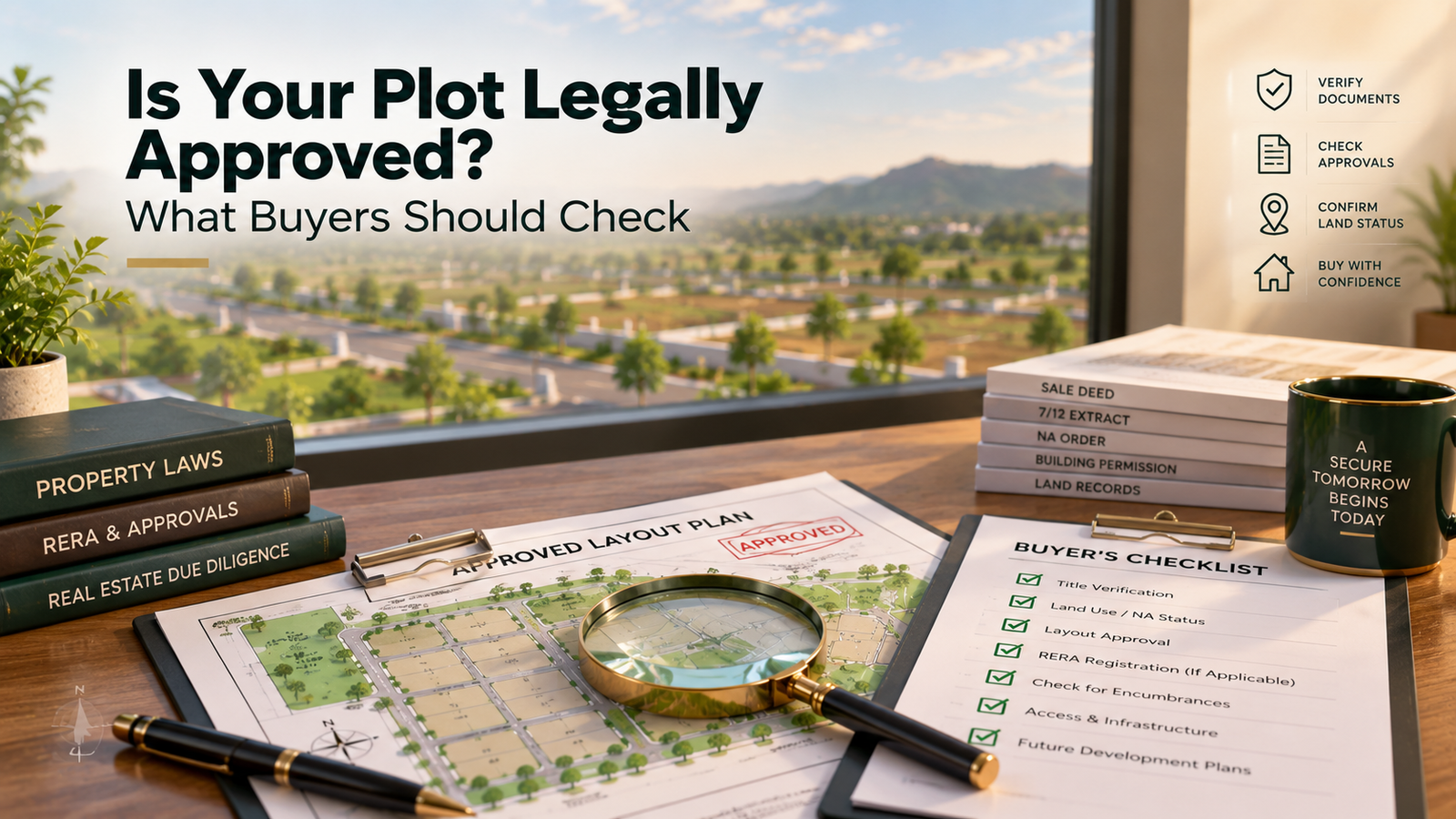
Before checking approvals, first understand the type of property being offered to you. The word “plot” can refer to different types of land, and the permissions, permitted use and documents can vary depending on its classification.
For example, a residential plot is generally intended for residential use as permitted by the applicable planning authority. An NA plot refers to land that has received permission for non agricultural use, subject to the applicable order and land use regulations. Agricultural land, on the other hand, may have restrictions on residential construction.
You may also come across terms such as bungalow plot, farmhouse plot or plotted development. These terms should not be treated as proof that the land is legally approved for residential construction. The actual land records, sanctioned layout and applicable permissions should be checked before making a purchase decision.
It is also important to understand what exactly is included in the sale. Check the plot number, area, boundaries, access road and the development shown in the approved documents. If roads, open spaces, amenities or other common areas are mentioned in the project information, verify that they are reflected in the relevant approved plans or documents.
Taking this first step helps avoid a common mistake: assuming that a property advertised as a “residential plot” automatically has all the permissions required for residential construction. The description used in an advertisement and the legal status of the land are two different things.
Verify Ownership and Title of the Land
Once you understand the type of plot you are buying, the next step is to verify who legally owns the land and whether the seller has the right to sell it. This is one of the most important checks before paying a booking amount or signing an agreement.
Start by reviewing the title documents and the property’s ownership history. The documents should show how the current owner acquired the land and whether previous transactions were properly recorded. A property lawyer can help examine the title chain and identify any gaps or concerns.
For land in Maharashtra, buyers should also check relevant land records such as the 7/12 extract and, where applicable, the property card. These records can provide information about the land, recorded holders and other entries associated with the property. Mutation entries should also be reviewed to understand whether changes in ownership have been properly recorded.
Another important check is whether the property has any existing loans, encumbrances, disputes, claims or legal restrictions. A plot may appear suitable on the surface but still have issues that are not immediately visible during a site visit.
Do not rely only on documents provided in a sales presentation. Wherever possible, verify important information through the relevant government records and approvals. If you are unsure about the meaning or validity of any document, getting an independent legal opinion before proceeding can help you make a more informed decision.
A clear title is the foundation of a property purchase. Taking time to verify ownership and related records at the beginning can help prevent complications later.
Check the Layout and Development Permissions
After verifying ownership, the next step is to check whether the plot is part of an approved layout and whether the development has the necessary permissions. This is particularly important when buying a plot within a larger plotted development.
Ask for the sanctioned layout plan and compare it with the information provided by the seller. The plot number, dimensions and location shown on the plan should correspond with the plot being offered to you. This simple comparison can help identify differences between the marketed property and the approved plan.
The layout should also clearly indicate important elements such as internal roads, access points, open spaces and common areas. Check whether the road shown on the approved plan provides access to your particular plot and whether the dimensions of the plot match the approved layout.
It is equally important to understand what development permissions have been obtained for the project. Depending on the location and nature of the development, different approvals may be applicable from the relevant planning or local authority.
A site visit should be done along with the document check. Look at the actual plot boundaries, internal roads and surrounding development and compare what you see on site with the approved layout. If there is a significant difference, ask the developer or seller for clarification before proceeding.
The key point is to verify both the paperwork and the physical property. An approved layout gives you important information about how the development is planned, but the actual site should also match the approved documentation.
Understand NA Status, Construction Permission and RERA
A plot being described as residential does not automatically mean that every permission required for construction is in place. Buyers should understand the NA status, permitted land use and applicable project approvals before making a purchase.
NA, or Non Agricultural, status is an important consideration when land is being developed for purposes other than agriculture. However, NA status alone should not be treated as confirmation that a particular plot is ready for construction. The applicable land use, development permissions and conditions attached to the approvals also need to be checked.
You should ask the developer or seller for the relevant documents and confirm that the approved use of the land matches the purpose for which you intend to purchase it. If you plan to construct a house, also clarify what permissions or approvals will be required before construction can begin.
For plotted developments, check whether the project falls under the scope of MahaRERA and, where applicable, verify the project’s registration details on the official MahaRERA portal. RERA information can help buyers review publicly available project details, but RERA registration by itself should not be considered a substitute for checking land title, layout approval and other applicable permissions.
It is also useful to compare the documents with the information provided in brochures, advertisements and the sales agreement. If the plot area, layout, amenities or permitted use differs between the documents and marketing material, ask for clarification before proceeding.
Check the Developer and the Actual Project
Legal verification should not stop with land documents. If you are buying a plot within a planned development, it is equally important to understand who is developing the project and what has actually been developed on the ground.
Start by checking the developer’s background and previous projects. Look at the projects they have completed, their development history and the documentation available for the project you are considering. This can give you a clearer understanding of how the developer approaches project execution and documentation.
Next, compare the approved layout with the actual site. Check whether internal roads, plot boundaries, open spaces and other proposed infrastructure correspond with what is shown in the approved plans. If amenities or facilities are mentioned as part of the development, ask about their current status rather than assuming that everything shown in promotional material has already been completed.
It is also useful to compare information across different sources. The sales brochure, agreement, approved plans, land records and applicable MahaRERA details should not contain unexplained differences. If you notice differences in plot size, project boundaries, development commitments or other important details, ask the developer to clarify them in writing.
For buyers exploring plotted developments around Purandar, projects such as Codename Rising Purandar by Ranjeet Developers can be evaluated using the same checklist. Rather than relying only on the project’s location or future development potential, buyers should review its applicable approvals, layout, documentation, development status and the developer’s project information before making a decision.
A property purchase involves more than selecting a location and comparing prices. Checking the developer, documents and actual development together gives you a much clearer picture of what you are purchasing.
Conclusion
Buying a residential plot requires more than checking the location and price. Before making a commitment, take time to verify ownership, land records, NA status, approved layout, development permissions and applicable RERA details.
It is equally important to compare the documents with the actual property and understand the developer’s project history. If any document or approval is unclear, seek clarification and consider taking an independent legal opinion before proceeding.
A few hours spent on proper verification can help you understand exactly what you are buying and reduce the possibility of legal or practical complications later. For anyone considering a residential plot in Maharashtra, document verification should be treated as an essential part of the buying process, not as a final formality.
FAQs
1. How can I check if a residential plot is legally approved?
Check the property’s ownership and title documents, relevant land records, NA status, approved layout plan, development permissions and applicable RERA details. The exact documents required can vary depending on the location and type of property.
2. What documents should I check before buying a plot in Maharashtra?
Important documents may include the title documents, 7/12 extract, property card where applicable, mutation entries, approved layout plan, NA related documents, development permissions and applicable project registration details.
3. How can I verify a 7/12 extract?
The 7/12 extract can be checked through Maharashtra’s official land records services. Compare the information with the documents provided by the seller or developer and look for consistency in ownership and property details.
4. What is NA land and why is it important?
NA means Non Agricultural. When land is permitted for non agricultural use, the applicable order and land use should be checked to understand whether the proposed residential use is permitted. NA status alone does not replace other required approvals.
5. How can I verify an approved layout?
Ask for the sanctioned layout plan issued by the relevant authority. Check the plot number, dimensions, roads, access points, open spaces and other relevant details against the actual site.
6. Does every residential plotted development need MahaRERA registration?
Not necessarily. Whether a project requires registration depends on the applicable provisions and exemptions under the RERA framework. Buyers should verify the project’s specific status rather than assuming that registration is either always required or always unnecessary.
7. Should I hire a property lawyer before buying a plot?
For a significant property purchase, an independent property lawyer can review the title, ownership history, encumbrances, agreements and applicable approvals. This can help identify issues that may not be obvious to a first time buyer.
8. What should I check about the developer?
Review the developer’s previous projects, project documentation, approved layout, development status and applicable registrations. Also compare the information in the sales material with the official documents before proceeding.